Cleaning Towel
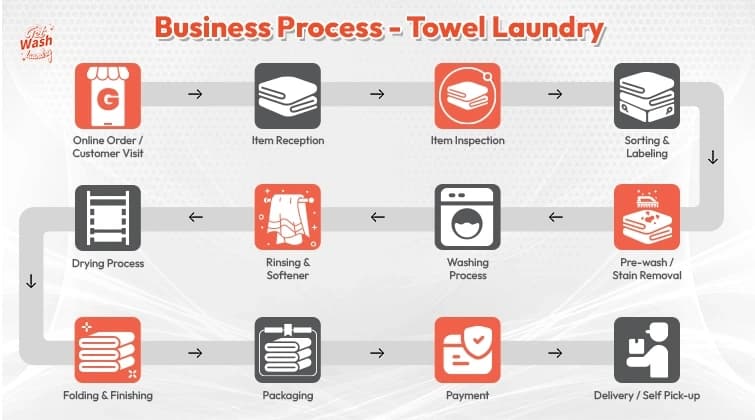
Contact us to schedule your order
09:00-20:00 (Weekday) & 09:00-17:00 (Weekend)
Ulasan Pelanggan
Belum ada ulasan untuk Cleaning Towel
Sudah pernah pakai? Ceritakan pengalamanmu supaya pelanggan lain bisa memilih dengan yakin.
Getwash Towel Laundry: Why Towels Turn Musty, Stiff, and Non-Absorbent in a Humid Climate, How Often to Wash Them, How to Care for Them Properly, and Towel Service for Homes, Hotels, Spas, Gyms, and Salons
By the Getwash Laundry Team | Updated 6 November 2026 | Reading time ±27 minutes
|
QUICK ANSWER Towels turn musty because bacteria grow in fabric that stays damp for a long time, and they become stiff and less absorbent because detergent and fabric softener residue builds up. Bath towels are best washed every 3–4 uses, face towels more often, and gym towels after every use. Wash with the right amount of detergent, avoid too much softener, and dry until completely dry. Getwash takes towel laundry for households and businesses such as hotels, villas, spas, gyms, and salons. The service page does not yet list towel prices, so contact WhatsApp 0812-6610-0500 for prices, pickup schedules, and regular arrangements. Service hours are Monday–Friday 09.00–17.00 and Saturday 09.00–15.00, closed on Sundays. |
Almost every home in Jakarta knows this problem: towels washed a few days ago already smell musty again, towels that used to be soft are now stiff as cardboard, or towels that look clean no longer absorb water properly after a shower. For hotel, villa, spa, or gym owners, the same problem happens with hundreds of towels a week, and every towel that smells or looks dull is immediately noticed by guests.
This article covers towel laundry service from our team's experience with household and business towels: why towels turn musty, stiff, and less absorbent in a humid climate, towel materials and how they matter, how often towels need washing, how to wash and dry them correctly, the special needs of towels for hotels, spas, gyms, and salons, when towels should be replaced, and how to order towel laundry at Getwash. If the towels at your home or business are starting to cause problems, start with the table of contents below. Most towel problems can actually be solved by changing a few simple habits when washing and drying, without buying new towels, and we explain them one by one.
Table of Contents
1. Why Towels Turn Musty, Stiff, and Non-Absorbent
2. Understanding Towel Materials and How They Affect Care
3. How Often to Wash Towels and How to Wash Them Properly
4. Towels for Business: Hotels, Villas, Spas, Gyms, and Salons
5. When to Replace Towels, How to Store Them, and Common Myths
6. Getwash Towel Laundry: Service Information and How to Order
7. FAQ: Questions About Towel Laundry
Why Towels Turn Musty, Stiff, and Non-Absorbent
Towels are designed to absorb as much water as possible. That is what makes them useful, and also what makes them prone to problems. Every time a towel is used, it absorbs water, dead skin cells, body oil, soap residue, and bacteria from the skin. If it is not washed and dried properly, all of this builds up inside the fibres.

Figure 1. Why towels turn musty, stiff, and non-absorbent (why-towels-turn-musty-stiff-and-non-absorbent-getwash-en.png)
Musty smell: bacteria in fabric that stays damp
A musty smell on towels comes from bacteria and mould growing in damp fabric. Towels hung in a bathroom without a window, folded while still wet, or left piled in the laundry basket give bacteria plenty of time to grow. Jakarta's humid climate makes this worse, because towels take a long time to dry completely, especially in the rainy season.
The smell that comes back when the towel is wet
Many people find their towels smell fresh when dry but immediately turn musty once they are wet after use. This is a sign that bacteria and residue have built up inside the fibres and are not being lifted by ordinary washing. Fragrance only masks the smell on the surface, and as soon as the towel is wet again, the original smell returns.
Stiff: detergent and mineral residue
Stiff towels are usually not damaged fabric, but fibres coated with residue. Too much detergent is not fully rinsed out and hardens in the fibres. Water containing lime or iron leaves mineral deposits. Drying towels for too long in strong sun also makes cotton fibres harden.
Not absorbent: fabric softener
Fabric softener works by coating fabric fibres with a thin layer that feels soft. On towels, this layer is exactly what makes the fibres less able to absorb water. Towels always washed with softener feel smooth, but after a shower they seem to just push water around on the skin. The more often and the more softener is used, the worse the absorbency gets.
Dull and discoloured
White towels that turn grey or yellowish are usually affected by a mix of detergent residue, body oil, and minerals from the water. In homes using iron-rich well water, white towels can slowly turn brownish. Coloured towels often washed in hot water or with bleach can fade unevenly.
“Musty, stiff towels are rarely the result of not washing them often enough; more often they are washed with too much detergent and softener, then not dried properly.” — Observation from the Getwash team
Marks that are hard to remove
Towels often pick up stains that are invisible when used: makeup and face cleanser residue, acne creams containing bleaching agents, hair dye, sunscreen, and massage oil. Some of these only show up after washing, and some can leave permanent pale or yellowish patches. We cover stains typical of businesses such as spas and salons in a separate section.
Lint sticking to clothes
Towels washed with clothes often leave clothes, especially dark ones, covered in lint and cotton fibres. In turn, clothes with zips, hooks, and sequins can pull towel threads and damage them. That is the simple reason towels should always be washed separately.
Why a humid climate makes everything worse
In a dry climate, a towel hung after a shower can dry in a few hours. In Jakarta, especially in unventilated bathrooms or in the rainy season, a towel can stay damp all day. A towel that never fully dries between uses is an ideal home for bacteria, which is why musty towel complaints are so common here.
Towels and skin health
Towels that are rarely washed and stay damp hold bacteria and fungi that transfer back to the skin every time they are used. For people with sensitive skin, acne, or a tendency to fungal infections, towel hygiene matters even more. Face towels in particular need attention, because facial skin is more sensitive and skincare products often transfer onto the towel.
Towels in boarding rooms and apartments
Boarding-room and apartment residents face extra challenges: windowless bathrooms, rules against drying laundry on balconies, and limited space. Towels are often dried in an air-conditioned room or on a damp bathroom door hook, so they never fully dry. For them, drying towels in a machine or sending them to a laundry regularly is often the most practical solution.
The problems we see most often
- Bath towels smelling musty even though they have just been washed.
- Stiff, rough towels from detergent and softener residue.
- Towels that do not absorb after a long time being washed with softener.
- Dull or yellowish white towels.
- Gym and sports towels with a lingering sweat smell.
- Hotel and spa towels with makeup, massage oil, or hair dye stains.
Understanding Towel Materials and How They Affect Care
Not all towels are the same. Material, thickness, and weave affect absorbency, softness, drying time, and how they should be cared for.

Figure 2. Towel materials and how to care for them (towel-materials-and-how-to-care-for-them-getwash-en.png)
Cotton: the most common choice
Most towels are made of cotton because it is highly absorbent, soft, and stands up to repeated washing. Cotton can be washed in warm water and copes well with machine drying. Cotton quality varies widely, from ordinary cotton to long-staple cotton that is softer and more durable.
Long-staple cotton
Premium towels are often made of cotton with longer fibres. Long fibres produce finer, stronger yarn, so the towel feels softer, sheds less, and lasts longer. Towels like these deserve more careful handling, especially when it comes to detergent dose and drying temperature.
Microfiber
Microfiber towels are made of very fine synthetic fibres. They are light, quick drying, and popular for sport, travel, and the gym. Microfiber must not be washed with fabric softener, which clogs its fine fibres, and should not be dried on high heat. Microfiber also easily picks up lint and hair from other laundry, so wash it separately.
Bamboo and blends
Bamboo viscose towels feel very soft and absorb well, but their fibres are more delicate than cotton. These towels are best washed in warm or cold water with a gentle detergent and dried on low heat. Many bamboo towels are actually blended with cotton.
Waffle and linen
Waffle-weave and linen towels are thinner, dry quickly, and suit humid climates. They may absorb less per towel than thick towels, but because they dry fast, they are less likely to smell musty.
Thickness and GSM
Towel thickness is often expressed as GSM, the weight of fabric per square metre. High-GSM towels feel thick and luxurious and absorb a lot of water, but take a long time to dry. In a humid climate, very thick towels are more likely to smell if not dried properly. Medium-GSM towels are often the most practical choice for everyday use in Jakarta.
White and coloured towels
White towels show dullness easily but tolerate warmer water, which helps lift body oil and bacteria. Coloured towels hide stains better but can fade if often washed in hot water or exposed to products containing bleaching agents, such as acne creams and toothpaste. Separate white and coloured towels when washing so colours do not transfer.
Pool and beach towels
Pool and beach towels are exposed to chlorinated water, sea water, sand, and sunscreen. Chlorine and salt can stiffen fibres and fade colours quickly, while sunscreen can leave yellowish marks. Rinse pool and beach towels in clean water as soon as possible after use, shake out the sand, then wash and dry as usual.
Choosing towels for a tropical climate
In a humid climate, the most practical towel is not always the thickest. Medium-weight cotton towels absorb well and dry faster, so they smell less often. For unventilated bathrooms or homes without adequate drying space, consider thinner or waffle-weave towels. Keep very thick towels for guests or special occasions, when there is time to dry them properly.
New towels: wash before use
New towels are often given a softener or finishing coating at the factory so they look and feel soft in the shop. This coating makes new towels less absorbent. Wash new towels before use, without softener, to remove the coating and any excess dye. Dark towels are best washed separately for the first few washes so they do not bleed onto other laundry.
Shedding lint
New towels, especially thick cotton towels, often shed fibres in the first few washes. This is normal and usually decreases after several washes. If a towel keeps shedding heavily after many washes, the yarn quality may be low or the fibres may be starting to break down.
How Often to Wash Towels and How to Wash Them Properly
The question we hear most is how often towels should be washed. The answer depends on the type of towel, how it is used, and how quickly it can dry between uses.

Figure 3. How often to wash towels (how-often-to-wash-towels-getwash-en.png)
General guide to washing frequency
- Bath towels: every 3–4 uses, more often if they cannot dry fully between uses.
- Face towels: every 1–2 uses, especially for acne-prone skin or when using skincare products.
- Gym and sports towels: after every use, because they absorb a lot of sweat.
- Kitchen and bathroom hand towels: every 2–3 days, or more often if used by many people.
- Baby towels: more often, washed separately with a gentle detergent.
- Guest towels: every time guests change.
This is a general guide, not an absolute rule. Towels that start to smell, stay damp, or are used by someone who is ill should be washed straight away without waiting.
When a family member is ill
If a family member is ill, especially with a skin infection, fungal infection, or contagious illness, their towels should be kept separate, changed more often, and washed separately. For heat-tolerant white cotton towels, washing in warmer water according to the label helps reduce germs. Follow any advice from health professionals too.
Do not share towels
Towels hold bacteria and fungi from their user's skin. Sharing towels, especially face and bath towels, can spread skin and fungal infections. Each family member should have their own towels, and guest towels should be kept separate.
How to wash towels properly

Figure 4. How to wash towels properly (how-to-wash-towels-properly-getwash-en.png)
- Separate towels from clothes. Towels shed lint onto clothes, and clothes with zips or hooks can damage towel fibres.
- Use just enough detergent. Follow the dose on the pack, or even slightly less. Too much detergent leaves residue that makes towels stiff and smelly.
- Avoid or reduce softener. Softener lowers absorbency. If you want towels to stay soft, proper drying works better than softener.
- Choose the temperature on the label. White cotton towels generally tolerate warm to hot water, which helps lift body oil and bacteria. Coloured, bamboo, and microfiber towels are best washed at lower temperatures.
- Do not overload the machine. Towels absorb a lot of water and get heavy. An overloaded machine cannot rinse thoroughly.
- Dry until completely dry. Towels folded while half damp will smell within days.
Drying towels in a humid climate
Drying is the most decisive stage in Jakarta. Hang towels somewhere breezy, spread them out fully rather than folding them over the line, and make sure the middle is completely dry before bringing them in. Avoid drying too long in strong sun, which stiffens the fibres. A dryer on medium heat makes towels feel softer and dry evenly, especially in the rainy season.
A smelly washing machine makes towels smell too
If towels still smell musty even when washed correctly, check the washing machine. The door seal on front loaders, the detergent drawer, and the bottom of the drum can grow mould and hold detergent residue that smells. Clean these parts regularly, leave the machine door open after use so it dries, and run a machine cleaning cycle according to the manufacturer's instructions.
Dryer temperature for towels
If using a dryer, choose medium heat for cotton towels and low heat for microfiber and bamboo. Too high a temperature can make fibres brittle and shrink towels, while too low a temperature leaves thick towels damp in the middle. Take towels out as soon as they are dry, shake them out, then fold or hang them.
Hanging towels between uses
After use, do not leave towels on the floor or bed, or folded on a door hook. Spread them on a rail or rack so air can flow on both sides. If the bathroom has no ventilation, hang the towel outside the bathroom. This one habit alone can greatly reduce mustiness.
Vinegar and baking soda: when they help
Some people use a little white vinegar in the rinse or baking soda in the wash to help lift residue and odour. This can help occasionally with cotton towels, but it is no substitute for the right detergent dose and thorough drying. Never mix vinegar with chlorine bleach, and follow the towel's care label, especially for bamboo and microfiber.
Bleach for white towels
Chlorine bleach does whiten, but used too often it can weaken cotton fibres and make towels thin out faster. In homes with iron-rich water, chlorine bleach can also turn white towels yellow. If you need to whiten, use bleach occasionally at the right dose according to the label, and rinse thoroughly.
Reviving stiff, non-absorbent towels
Towels that have become stiff and non-absorbent because of residue can often be revived with a proper rewash: the right detergent dose, no softener, and a thorough rinse with enough water, followed by proper drying. For large numbers of towels or towels with serious problems, professional washing with large-capacity machines and more rinsing often gives better results.
Baby towels
Babies' skin is more sensitive, so baby towels are best washed separately with a gentle detergent without strong fragrance, rinsed thoroughly, and dried completely. Avoid softener and too much fragrance. Baby towels that smell or feel stiff should not be used until they have been rewashed properly.
Towels for Business: Hotels, Villas, Spas, Gyms, and Salons
For businesses that provide towels to guests or customers, towels are not just supplies but part of the experience. Towels that are fresh, soft, and clean white give a professional impression; towels that smell, look dull, or are stained immediately lower guests' opinion. Getwash serves B2B clients such as hotels and commercial facilities, and business towels come with their own challenges.

Figure 5. Towel laundry needs for businesses (towel-laundry-needs-for-businesses-getwash-en.png)
Hotels, villas, and guesthouses
Hotels and villas need large numbers of towels to a consistent standard: white, soft, lightly fragrant, and neatly folded. The challenges are volume, schedules that follow guest changeovers, and keeping towels white after hundreds of washes. Towels that start to look dull, shed lint, or carry permanent stains need to be removed from guest stock.
Spas and massage: special attention to oil
Spa towels are often exposed to massage oil, lotion, and masks. Oil does not lift easily with ordinary washing and can make towels smell rancid and look dull. There is also a safety risk worth knowing: towels with vegetable oil residue that are dried with heat and then piled while still warm can generate heat on their own and, under certain conditions, risk catching fire. That is why spa towels need washing that truly removes oil and proper handling during drying.
Gyms and fitness studios
Gym towels absorb large amounts of sweat and are often piled in baskets for hours before washing. This combination makes sweat smells set in quickly. Gym towels are best washed daily, not left piled wet for too long, and dried thoroughly. Microfiber towels often used in studios need different handling from cotton towels.
Salons, barbershops, and beauty clinics
Salon towels are often exposed to hair dye, bleaching, and hair treatment chemicals, while beauty clinic towels are exposed to creams, serums, and masks. Hair dye can leave permanent stains, and bleaching agents can leave pale patches on coloured towels. Many salons choose dark towels for colouring areas and keep white towels for washing hair and facials.
Villas, holiday rentals, and short-stay accommodation
Owners of villas and holiday rentals often face unpredictable schedules, with guest changeovers several times a week or all at once at the weekend. Towels and sheets must be ready in the short window between check-out and check-in. Keeping enough spare stock and a clear pickup schedule makes changeovers run without a rush.
Keeping hotel towels white
Clean white hotel towels are the standard guests expect. Dullness usually builds up gradually from detergent residue, body oil, skincare products, and minerals in the water. Washing with the right dose, rinsing thoroughly, and separating heavily stained towels from the start help keep towels white for longer. Towels that are permanently dull are best moved to internal use rather than guest use.
Volume, schedule, and standards
For businesses, the things to agree on with a laundry provider are average volume, pickup frequency, return time, folding and packing standards, and how to handle towels that are permanently stained or damaged. Clear agreements from the start prevent stock shortages on busy days.
The guest's first impression
For hotel guests or spa customers, towels are among the first things they touch and smell. Towels that are soft, dry, and lightly fragrant give an impression of cleanliness and care, while one smelly or stained towel can lower the opinion of the whole facility. Investing in towel care often pays off in guest reviews.
Working out business towel stock
A common practice in hospitality is to have several sets of towels for every set in use: one with the guest, one at the laundry, and one spare in storage. With this pattern, a business does not run short while the laundry is processing, and each towel gets rest time that extends its life. Discuss the ideal stock level with Customer Service when setting up a regular schedule.
Managing permanently stained towels
Every business eventually has towels that are permanently stained, holed, or shedding heavily. Set a clear rule: towels like these are taken out of guest stock and used for other purposes, such as cleaning cloths or staff towels. That way the quality of towels guests see stays high without throwing away towels that can still be used.
Other linen in spas, salons, and guesthouses
Besides towels, businesses such as spas, salons, and guesthouses usually also have massage sheets, pillowcases, bathrobes, and covers that are washed just as often. Combining all of this linen in one pickup schedule makes stock easier to manage. For sheets and pillowcases, there is also bedsheet laundry.
Working with Getwash
Getwash is known as the go-to laundry for government officials and high-profile clients, and also serves B2B clients such as hotels and commercial facilities. For business towels, tell Customer Service your type of business, estimated number of towels per week, the stains that often appear, and the schedule you need so the arrangement and prices can be discussed.
When to Replace Towels, How to Store Them, and Common Myths
Good care extends a towel's life, but every towel eventually needs replacing. Recognising the signs helps you avoid using towels that are no longer hygienic or comfortable.

Figure 6. Signs a towel needs replacing (signs-a-towel-needs-replacing-getwash-en.png)
Signs a towel needs replacing
- Still smells even after being rewashed the right way.
- Stiff and non-absorbent even after several washes without softener.
- Many pulled threads, tears, or fraying hems.
- Thin and holed in the most used areas.
- Permanent stains or badly changed colour.
- Black mould spots that do not come out after washing.
As a rough guide, many household towels last several years with good care, but their life depends heavily on quality, how often they are used, and how they are washed. Towels no longer fit for bathing can still be used as rags or cleaning cloths.
Storing towels
Store towels only when they are completely dry. A damp or tightly closed cupboard can make clean towels smell musty within a few weeks. Store them on a ventilated shelf, not packed too tightly, and add a moisture absorber if the cupboard is in a humid room. Rotate your towels so none stay stored for too long.
How many towels a home needs
As a guide, each family member should have at least two to three bath towels, so there is always one in use, one in the wash, and one dry and ready. With this number, towels never need to be used before they are fully dry, and each towel gets rest time that extends its life. Add a few guest towels and hand towels to suit your home.
Common towel washing mistakes

Figure 7. Common towel washing mistakes (common-towel-washing-mistakes-getwash-en.png)
Most of the towel problems we see come from the same few mistakes: too much detergent in the hope of cleaner towels, softener in every wash, an overloaded machine to save a cycle, wet towels piled in the basket for days, and towels folded before they are completely dry. Fixing just two or three of these habits is often enough to make towels fresh and absorbent again.
Towels and the environment
Washing towels in a properly sized load, not too small and not too full, is the most efficient use of water and electricity. Hanging towels properly after use also reduces how often they need washing, because towels that dry quickly can be used a few times before they need a wash. Old towels that are no longer fit for use can become rags or cleaning cloths before being thrown away.
Myths about towel care
- "More detergent means cleaner towels." Too much detergent actually leaves residue that makes towels stiff and smelly.
- "Softener makes towels better." Softener makes towels feel smooth, but lowers their absorbency.
- "Towels are used on a clean body, so they do not need washing often." Towels still absorb skin cells, oil, and bacteria from the skin, and get damp every time they are used.
- "Fragrance gets rid of towel smell." Fragrance only masks the smell; the mustiness returns as soon as the towel is wet.
- "Drying in the sun all day makes towels cleanest." Sun helps them dry, but too long stiffens the fibres and fades the colour.
Towels and iron-rich water
If white towels at home slowly turn brownish even though they are always washed, check whether the water at home is high in iron, for example from orange stains on the bathtub. Iron in water settles on towel fibres, especially when washed with chlorine bleach. For rust and yellowing like this, there is rust stain removal with its own assessment.
Small habits that make a big difference
- Spread towels out after use; do not fold or pile them.
- Hang them outside the bathroom if the room is not ventilated.
- Wash them separately from clothes with just enough detergent.
- Reduce or stop using softener.
- Make sure they are dry right through before storing.
- Keep enough towels to rotate them.
Getwash Towel Laundry: Service Information and How to Order
Getwash takes towel laundry for households and businesses. Towels can be sent on their own or with other laundry, and regular pickup can be arranged for routine needs.
About towel laundry prices
The Towel Laundry service page does not yet list prices. We prefer not to quote figures that are not official. Contact WhatsApp 0812-6610-0500 to find out towel prices, whether they are charged per piece or per kilo, and the options for businesses with regular volume. For household towels sent with everyday clothes, also ask about laundry by the kilo.
Why send towels to a laundry
Towels are heavy laundry that takes a long time to dry. Many homes and apartments in Jakarta do not have enough space to dry laundry, and home washing machines are often too small to rinse thick towels thoroughly. A laundry with large-capacity machines and drying facilities can wash and dry towels more thoroughly, especially in the rainy season when towels at home hardly ever dry completely.
What to tell us when ordering
- The number and type of towels: bath towels, face towels, hand towels, pool towels, gym towels.
- The towel material if known: cotton, microfiber, bamboo.
- The problem you want solved: musty smell, stiffness, dullness, or particular stains.
- For businesses: type of business, volume per week, and the schedule you need.
- Any preferences, for example no fragrance or no softener; ask whether they can be accommodated.
Towels with special stains
Towels with hair dye, makeup, oil, or rust stains need different handling from ordinary washing, and not every stain can be removed completely. Mention the type of stain when ordering so it can be assessed first. For rust stains there is rust stain removal, and for dye bleeding from other fabrics there is color bleed removal.
Other bedding and bathroom items
Towels are often washed along with other household items that need attention too. For sheets and pillowcases there is bedsheet laundry, for bedcovers and thick blankets there is bedcover cleaning, and for pillows there is pillow care. Everything can be combined in one pickup.
Pickup and delivery fees
Since 20 June 2026, pickup and delivery have been charged per trip based on distance from the nearest outlet: Zone 1 (0–3 km) Rp8,000, Zone 2 (3–7 km) Rp15,000, and Zone 3 (over 7 km) Rp22,000. You can also drop items off yourself at our outlet at Jl. Ceger Raya No.42, Jurang Mangu Barat, Kec. Pd. Aren, Kota Tangerang Selatan, Banten 15222.
How to order towel laundry

Figure 8. How to order towel laundry (how-to-order-towel-laundry-getwash-en.png)
- Count the number and type of towels you are sending.
- Note any problems or special stains, such as mustiness, stiffness, oil, or hair dye.
- Contact [WhatsApp 0812-6610-0500](https://wa.me/6281266100500) for prices, turnaround, and pickup schedule.
- Schedule pickup through the order page, or drop them off at the outlet yourself.
- Track the status of your order on the tracking page.
- Receive your towels back clean and dry.
When towels come back from the laundry
When you receive towels from the laundry, store them somewhere dry and ventilated, not in a damp cupboard. If the towels will not be used straight away, do not leave them wrapped in plastic for too long in a hot, humid room. For businesses, check the number and condition of towels on delivery so stock records stay accurate.
Families with babies and elderly members
Families with babies, elderly members, or anyone with sensitive skin often need more towels, washed more often. Ask Customer Service whether washing without fragrance or softener can be accommodated, so towels stay comfortable on the skin without residue that could irritate.
Regular arrangements for homes and businesses
For households with many members or homes without adequate drying space, regular pickup of towels and bedding can be a great help. For businesses, a regular schedule makes sure clean towel stock is always available. Tell Customer Service what you need so the frequency can be arranged.
Service hours and location
Customer Service hours: Monday–Friday 09.00–17.00, Saturday 09.00–15.00, closed on Sundays. Our main outlet is at Jl. Ceger Raya No.42, Jurang Mangu Barat, Kec. Pd. Aren, Kota Tangerang Selatan, Banten 15222. We serve customers in Pondok Aren, Bintaro, BSD, Ciledug, South Jakarta, and the surrounding area. If you are looking for laundry near me for household or business towels, contact us first. Our team is ready to help set up the schedule that best suits your needs.
A summary to remember
- Mustiness comes from towels that stay damp; dry them thoroughly.
- Stiffness and poor absorbency usually come from too much detergent and softener.
- Wash bath towels every 3–4 uses and gym towels after every use.
- Businesses need a regular schedule, spare stock, and handling for special stains.
- Ask Customer Service for towel laundry prices before ordering.
Our experience
Household towels that turn musty the moment they are wet, towels stiff from years of being washed with softener, dull hotel towels shedding lint, and spa towels smelling rancid from massage oil: these are the towels we see most often. Almost all of them come down to the same two things, built-up residue and incomplete drying. We have written this experience down so the towels at your home and business stay fresh, soft, and absorbent for longer. If you have tried everything at home and your towels still cause problems, send a photo and describe your washing habits to our team; often the cause can be traced to a small detail nobody noticed.
Ready to send your towels? Contact WhatsApp 0812-6610-0500, order through the order page, or follow us on Instagram, TikTok, Facebook, and Threads.
FAQ: Questions About Towel Laundry
Why do my towels smell musty so quickly?
Because bacteria grow in towels that stay damp for a long time, along with detergent residue and body oil building up in the fibres. Dry towels thoroughly and do not fold them while damp.
Why do towels become stiff?
Usually because of too much detergent residue, mineral deposits from the water, or drying too long in strong sun.
Why do towels stop absorbing water?
Fabric softener coats towel fibres and lowers their absorbency. Rewash without softener and with the right amount of detergent.
How often should bath towels be washed?
As a general guide, every 3–4 uses, and more often if the towel cannot dry fully between uses.
How often should face towels and gym towels be washed?
Face towels every 1–2 uses, and gym towels after every use.
Do new towels need washing before use?
Yes. Wash without softener to remove the factory finishing and excess dye, and wash dark towels separately for the first few washes.
How much does towel laundry cost at Getwash?
The service page does not yet list towel prices. Contact WhatsApp 0812-6610-0500 for prices, turnaround, and business options.
Does Getwash handle towels for hotels, spas, gyms, and salons?
Yes. Tell us your type of business, volume per week, the stains that often appear, and the schedule you need so the arrangement and prices can be discussed.
Can hair dye and makeup stains on towels be removed?
Not always. Some stains, especially hair dye and patches from bleaching agents, can be permanent. Mention the stain type so it can be assessed first.
Why do spa towels need special handling?
Massage oil is hard to lift with ordinary washing and makes towels smell rancid. Towels with oil residue also need proper handling during drying for safety reasons.
When should a towel be replaced?
When it still smells after a proper rewash, stays stiff and non-absorbent even without softener, is thin, torn, or has permanent mould.
How much is pickup and delivery?
Since 20 June 2026: Zone 1 (0–3 km) Rp8,000, Zone 2 (3–7 km) Rp15,000, Zone 3 (over 7 km) Rp22,000 per trip.
What are Getwash Customer Service hours?
Monday–Friday 09.00–17.00 and Saturday 09.00–15.00. Closed on Sundays. Messages can be sent at any time and are answered during the next service hours.
Sources
- Getwash Laundry towel cleaning service page
- Getwash Laundry Handuk page (ID)
- Getwash Laundry tracking page
- New Policy Notice: Pickup & Delivery Rates (effective 20 June 2026)